
What is shoulder arthritis?
Arthritis is damage to the cartilage in joints. Shoulder arthritis occurs when the cartilage starts breaking down on the ball and/or socket sides of the shoulder joint.
What are the causes of shoulder arthritis?
- Aging: A natural part of aging, most common in people over 60
- Injury: A fracture, dislocation, infection, or rotator cuff tear can contribute to shoulder arthritis
- Occupation: Jobs that require repetitive overhead movements, like painting or plastering
- Sports: Sports like volleyball and badminton can contribute to shoulder arthritis
- Genetics: Smoking or genetics can influence the development of shoulder arthritis
What are the types of shoulder arthritis?
- Glenohumeral Osteoarthritis: This is the most common type and it can happen without any cause (primary) or due to causes like rheumatoid arthritis, avascular necrosis, trauma or infection.
- Cuff tear arthritis: This is a special type of arthritis developing in patients with long standing rotator cuff tear.
What are the main symptoms of shoulder arthritis?
- Pain in the shoulder joint and upper arm
- Pain that worsens when you move the joint or at the end of the day
- Stiffness in the morning after waking up or after sitting for a long time
- Restriction of shoulder joint movements
- Grating or crackling sounds when you move the joint
What are the investigations needed?
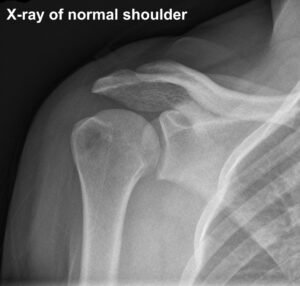
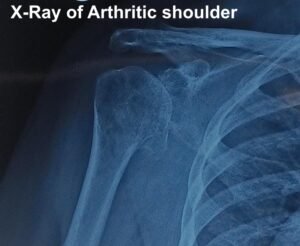
X-ray of the shoulder joint is needed to confirm the presence of arthritis. They can also be used to grade the severity of arthritis.
CT scans or MRI are needed mainly for surgical planning.
What is the treatment of shoulder arthritis?
Non-Surgical options:
These are first line of treatment.
- Pain medication: Simple painkillers like paracetamol can help manage pain
- Heat or ice: You can apply ice or moist heat to reduce inflammation and ease pain
- Exercises and physiotherapy: You can do exercises and stretches to keep your joints healthy and stimulate the natural lubricating fluid
- Injections: Steroid / Hyaluronic acid / Plasma (PRP) – Know More
Surgical options:
When the nonsurgical treatments don’t work any longer, you may need surgery. Surgical options depend on your age and the degree of arthritis.