
This page gives information on MPFL reconstruction which is a surgery done for knee cap dislocation. To know more about kneecap (Patella) dislocations in general, Click Here
What are the indications of this surgery?
- Recurrent patellofemoral instability: Repeated episodes of kneecap dislocation or subluxation (partial dislocation)
- Failed conservative treatment: After non-operative methods (such as bracing and physiotherapy) have not resolved instability.
- Persistent symptoms after first dislocation: surgery may be considered after a single dislocation if there are ongoing symptoms of instability, confirmed by imaging or physical examination, especially in active individuals or those with associated osteochondral fractures.
- Sports participation: Athletes with recurrent instability or high risk of recurrence may be considered for earlier surgical intervention.
What is the aim of this surgery?
The aim of medial patellofemoral ligament (MPFL) reconstruction surgery is to restore stability to the patella (kneecap) by reconstructing the ligament that prevents it from dislocating laterally (outward). By doing so, the procedure restores normal patellar tracking and knee joint function, thereby reducing pain and improving the patient’s ability to perform daily activities and sports. It also helps protect the joint from additional cartilage or bone damage that can result from repeated dislocations
What is the surgical procedure in detail?
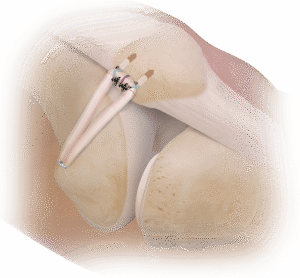
The surgery is done under spinal or general anaesthesia. In this surgery the stretched or damaged MPFL is reconstructed with your own hamstring tendon. To do this, one of the hamstring tendon is harvested and graft prepared. Small skin incision is made along the inner border of the patella. The prepared tendon is attached to the patella (kneecap) using bone anchors. The other end of the tendon is passed through a tunnel in the lower end of femur (thigh bone) and fixed with absorbable screw or button. Skin is closed with clips or sutures. Knee is immobilized in a brace. The duration is surgery is 60-90 minutes.
What are the usual outcomes of this surgery?
This surgery generally yields good clinical and functional outcomes with high patient satisfaction and a low rate of recurrence of patellar instability. The recurrence rate of patellar dislocation after surgery ranges from about 8% to 12%.
Return to Activity/Sport: Most patients return to their previous level of physical activity or sports following surgery, attributable to restored patellar stability and improved biomechanics.
What are the common complications and risks of this surgery?
- Recurrent patellar instability (8–12%)
- Patellar fracture (1-3%)
- Loss of knee flexion or stiffness.
- Front knee pain and patellofemoral arthritis (5–10%) Other risks:
- Infection (rare, <1%),
- Wound complications, hematoma, neurological injury (e.g., femoral nerve palsy), and deep vein thrombosis are uncommon but possible.
What is the usual timeline and postop rehabilitation?
- Hospital stay: 1-2 days
- Knee immobilization: Brace for 4 weeks, Partial weight bearing with crutches for 4 weeks
- Return to work: Desk based (work from home): 1-2 weeks
Manual work: 3 months
- Return to sports: 6 months