
What is frozen shoulder?
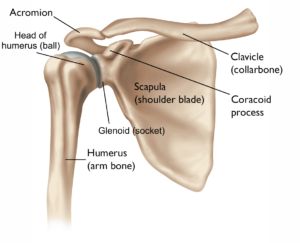
Adhesive capsulitis, also known as frozen shoulder, is a painful condition which results in a severe loss of motion in the shoulder because of scarring and fibrosis of the joint capsule (the deepest layer of covering of the joint). The prevalence of adhesive capsulitis in the general population is 2% – 5%. It is common in women and is common in the age group of 40-60 years.
What are the main symptoms of frozen shoulder?
- Shoulder Pain – aggravated by movements. Pain comes down in later stages.
- Stiffness – Restriction of shoulder movements (difficulty in raising arm, difficulty in reaching out to objects)
What are the causes of frozen shoulder?
Based on the cause it can be divided into:
- Primary adhesive capsulitis: Occurring spontaneously in a previously healthy shoulder with no known etiology.
- Secondary adhesive capsulitis: frozen shoulder developing after shoulder injury or trauma and after shoulder surgery.
Patients with thyroid disorders and diabetes mellitus, are more prone to developing frozen shoulder.
What is the treatment of frozen shoulder?
- Exercises and physiotherapy (First line of treatment)
- Intra-articular steroid injections – know more
- Manipulation under Anaesthesia and hydrodistension
- Arthroscopic shoulder capsular release (arthrolysis)
What is Manipulation under Anaesthesia and hydrodistension?
This procedure is done if the symptoms do not improve with exercises and injections. It is a procedure done under anaesthesia. Around 50-60ml of Saline is injected into the shoulder joint to stretch out the capsule. Then the shoulder is manipulated to break down scar tissue and to regain the movements. It is important to continue exercises after the procedure to retain the improvement in range of movement.
What is Arthroscopic arthrolysis or Capsular release surgery?
It is a surgical procedure done to release the adhesions and scar tissue inside the shoulder. It is a key hole surgery (arthroscopy). It is done in patients who have not improved with non-operative treatment methods.
To know more about this surgery Click here